
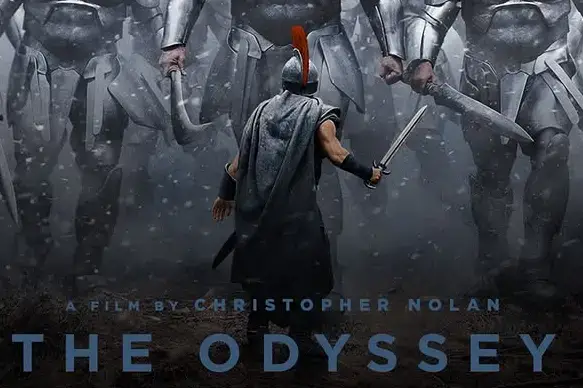
The wait is almost over. Christopher Nolan's The Odyssey arrives in theatres on July 17, 2026, and it has already become one of the most anticipated films of the year. From its cryptic marketing campaign and visually striking trailers to its star-packed cast, every new reveal has sparked fresh discussion and fueled excitement among movie fans worldwide.
Inspired by Homer's timeless epic, The Odyssey blends Greek mythology with Christopher Nolan's signature filmmaking style, combining large-scale spectacle with emotionally driven storytelling. Shot entirely with IMAX film cameras and featuring an acclaimed ensemble cast, the film has generated enormous anticipation long before its release. Whether you're curious about its release date, cast, trailers, filmmaking innovations, or the story behind Nolan's ambitious adaptation, here's everything you need to know about The Odyssey.
Christopher Nolan's The Odyssey Production Burned Through Two Million Feet Of Physical IMAX Film
Christopher Nolan once again pushed the limits of modern filmmaking by shooting more than 2 million feet of physical IMAX film during the 91-day production of The Odyssey. The enormous amount of footage reflects the film's extraordinary scale, as IMAX cameras consume nearly 337 feet of 65mm film every minute, almost four times more than traditional 35mm cameras. The raw film stock alone reportedly costs around $3 million. For Nolan, however, the investment was another step toward creating an immersive cinematic experience using practical filmmaking instead of digital shortcuts.
The achievement becomes even more impressive because The Odyssey is widely regarded as the first major studio feature filmed entirely with IMAX cameras from start to finish. In earlier films such as The Dark Knight and Oppenheimer, Nolan had to switch to smaller film formats for dialogue scenes because IMAX cameras produced too much noise. Refusing to compromise, he collaborated with IMAX engineers to create new, lighter 15-perf 70mm cameras equipped with an advanced blimping system featuring improved sound-damping, making dialogue scenes far more practical to film with IMAX cameras. The breakthrough allowed the crew to capture quiet, emotional conversations while preserving the breathtaking clarity and scale that IMAX is known for.
If you love deep dives into massive streaming sensations, check out our breakdown of the Citizen Vigilante Streaming Guide | Where to Watch Armie Hammer's Controversial Movie Online
Nolan's dedication to realism extended well beyond the camera technology. Instead of relying on green screens or CGI, he spent months filming on the open sea, where Matt Damon and the rest of the cast performed amid real waves and unpredictable weather. The production also built massive practical sets, including a life-sized Trojan Horse and detailed shipwrecks, with hundreds of extras bringing each sequence to life. By keeping the cameras rolling through these challenging conditions, Nolan captured a level of authenticity and cinematic grandeur that gives The Odyssey a truly epic feel and sets it apart from most modern blockbusters.
Non-Linear Timeline Framework Adapts Homer's Ancient Epic With 3 Pronged Narrative Structure
True to his signature storytelling style, Christopher Nolan appears to reimagine Homer's The Odyssey through a bold non-linear narrative rather than following the epic's traditional chronological order. Based on the trailers and production details released so far, the story seems to move between multiple timelines, gradually revealing key events as the journey unfolds. The approach echoes the intricate narrative design seen in Dunkirk and Oppenheimer, creating a layered experience that keeps audiences piecing together the larger story.
The first narrative thread centres on Ithaca, where Queen Penelope and Prince Telemachus struggle to keep the kingdom together while Odysseus remains missing. Set during the final weeks before the legendary king's return, this storyline unfolds like a tense political thriller. As powerful suitors close in on the throne, the royal family fights to preserve their legacy, raising the emotional stakes with every passing day.
The second timeline follows Odysseus's decade-long journey home, delivering the film's grand IMAX spectacle. Instead of unfolding in a continuous sequence, his adventures emerge through fragmented memories, stories, and flashbacks that slowly reveal the hardships he has endured. From terrifying encounters with mythical creatures to battles against the wrath of the gods, each chapter exposes the physical and emotional toll of a hero desperately trying to return to his family.
The final narrative thread transports audiences back to the aftermath of the Trojan War, revealing the defining moments that shaped Odysseus's fate. This storyline explores the victory at Troy, the decisions that provoked the gods, and the pride that ultimately cursed his voyage home. As these three timelines gradually converge, Nolan transforms Homer's timeless epic into an emotionally rich mystery, allowing each revelation to deepen the audience's understanding of the characters and the sacrifices that define their journey.
Star-Studded The Odyssey Cast Features Matt Damon And Tom Holland As Ithacan Royalty
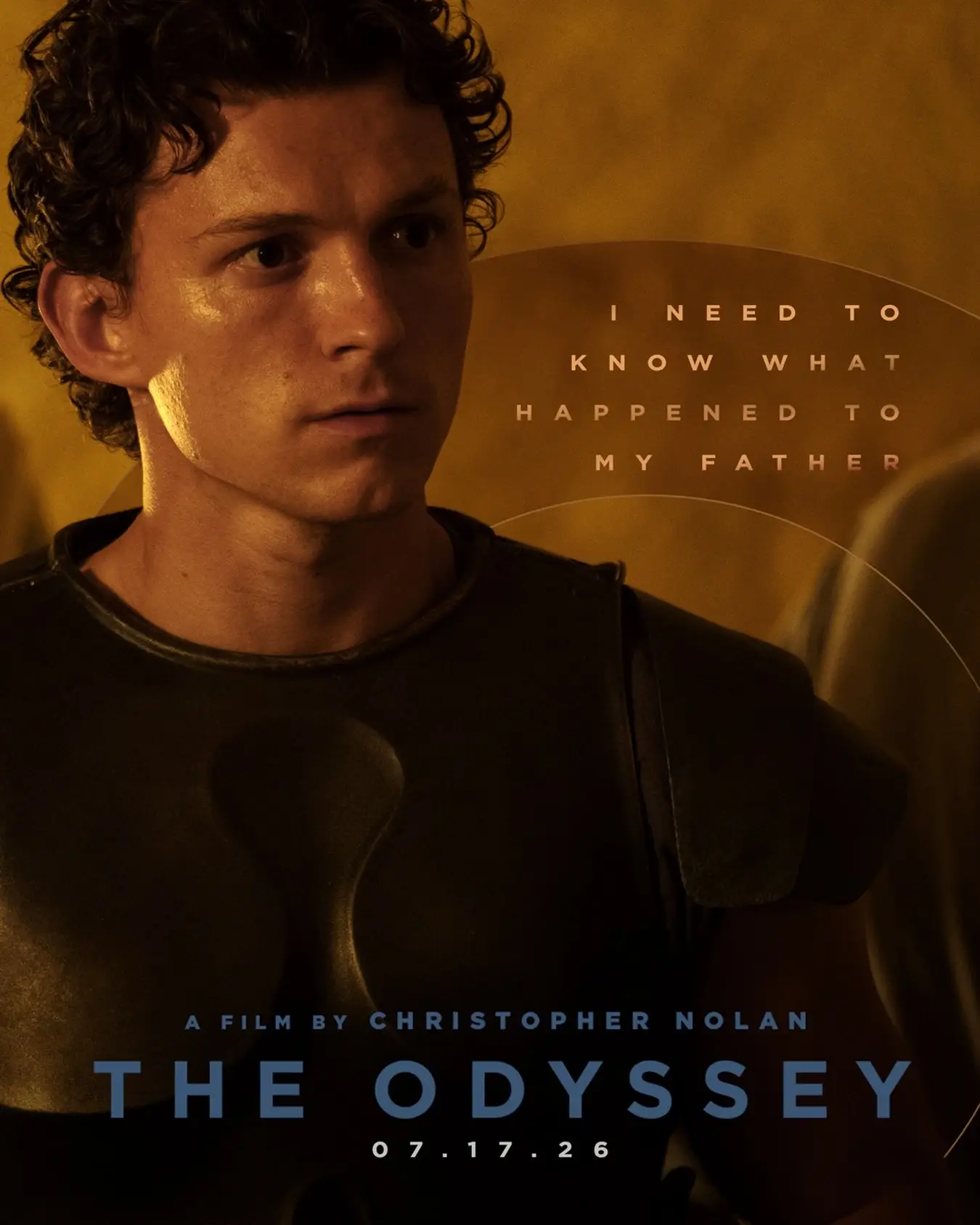
Christopher Nolan has assembled an extraordinary ensemble for The Odyssey, with Matt Damon and Tom Holland leading the story as the legendary father and son duo, King Odysseus and Prince Telemachus. Before the official casting announcement, many fans believed Holland would take on the title role. However, Universal Pictures confirmed Damon as the battle-hardened King of Ithaca, while Holland stepped into the equally important role of his courageous son. Together, their relationship is expected to be one of the film's emotional centres.
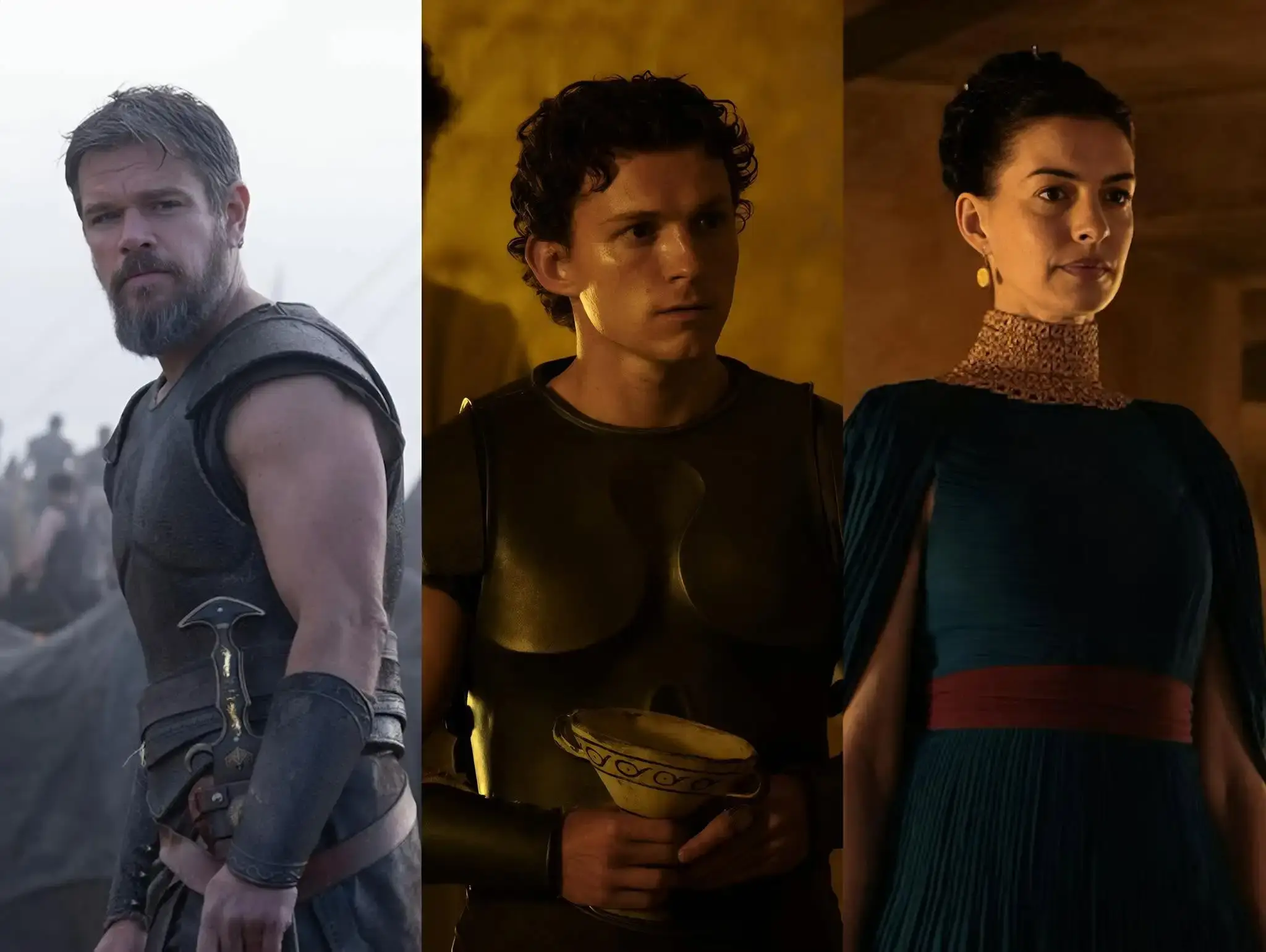
Matt Damon reunites with Nolan for the third time following Interstellar and Oppenheimer, but this marks his first leading role under the acclaimed director. As Odysseus, he portrays a legendary warrior haunted by the horrors of the Trojan War while enduring a perilous voyage across the sea in a desperate attempt to return to his kingdom and loved ones. He is expected to portray both the strength of a fearless king and the emotional burden of a warrior trying to return home after years of war and hardship.
Tom Holland takes on one of the most mature roles of his career as Telemachus, the young prince forced to grow up without his father's guidance. Left behind to protect the throne of Ithaca, he must defend his mother against ambitious suitors while embarking on a dangerous search for the father he barely remembers. The role is expected to showcase a more grounded and dramatic side of Holland's acting, moving beyond his superhero image into a historical adventure.
Trending Now: Check out our most-read story of the week, the Daisy Chain Fields Festival 2026 | Lineup, Irvine Tickets, Dates, and Presale Details
The royal family is strengthened by an impressive supporting cast. Anne Hathaway reunites with Nolan for the third time as Queen Penelope, a determined ruler who refuses to surrender hope despite growing political pressure and constant threats to her crown. Robert Pattinson plays Antinous, the ruthless leader of the suitors seeking to seize Odysseus's throne, bringing one of the story's central villains to life.
Meanwhile, John Leguizamo portrays Eumaeus, the fiercely loyal swineherd whose unwavering devotion to the royal family makes him one of Telemachus's most trusted allies. Together, this star-studded cast brings emotional depth, powerful performances, and larger-than-life characters to one of Christopher Nolan's most ambitious films.
Grounded Realism Reimagines Divine Intervention Through Terrifying Environmental Weather Phenomena
Christopher Nolan takes a strikingly grounded approach to Greek mythology by replacing traditional depictions of the gods with the overwhelming forces of nature in The Odyssey. Instead of showing divine beings descending from Mount Olympus, the film presents violent storms, towering waves, shifting tides, and relentless lightning as manifestations of what ancient people believed to be the will of the gods. This creative direction allows the story to remain rooted in realism while preserving the fear, mystery, and spiritual significance that defined Homer's epic.
At the heart of Nolan's vision is the idea that many events now explained by science were once seen as acts of divine intervention. Rather than relying on magical curses or supernatural spectacles, the film portrays the "wrath of the gods" through unpredictable weather and the unforgiving power of the natural world. For Odysseus and his crew, these terrifying phenomena are not random disasters but undeniable signs that higher powers are judging every decision they make. This perspective places audiences inside the ancient Greek worldview, where survival depended as much on earning the gods' favour as it did on courage and skill.
The same philosophy extends to the film's legendary monsters, which are reimagined with a grounded and believable edge. Scylla and Charybdis are transformed into catastrophic ocean hazards, with colossal rogue waves and deadly whirlpools becoming nearly insurmountable obstacles to escape. Meanwhile, Polyphemus the Cyclops is portrayed as a terrifying, physically imposing brute instead of a fantastical creature. To enhance the realism, Nolan combined an enormous 60-foot mechanical build with puppetry and actor Bill Irwin, filming the sequence inside a real Greek cave to create an atmosphere that feels raw, oppressive, and intensely immersive.
Read More: Stay updated with our latest features in the Entertainment Category
Beyond its visual spectacle, the environment itself becomes a powerful storytelling device. The endless sea, violent storms, and isolated landscapes reflect Odysseus's emotional state, mirroring his grief, guilt, and the psychological scars left by the Trojan War. The changing sea and harsh weather become central storytelling elements that mirror his inner struggles while continually shaping the challenges he must overcome. By blending practical filmmaking with psychological storytelling, The Odyssey aims to deliver a visually immersive adaptation that remains faithful to the emotional core of Homer's timeless tale while reflecting Christopher Nolan's distinctive filmmaking style.
For More News, Entertainment, Follow CelebWikiCorner.
.webp)
.webp)
.webp)
.webp)
.webp)
.webp)
.webp)
.webp)
.webp)

.webp&description=Entertainment)
.webp&description=Entertainment)
.webp&description=Entertainment)
.webp&description=Entertainment)
.webp&description=Entertainment)
.webp&description=Entertainment)
.webp&description=Entertainment)
.webp&description=Entertainment)
.webp&description=Entertainment)