

Bruce Willis became an action icon as John McClane, but a year before Die Hard transformed his career, he passed on another role that could have changed everything: Martin Riggs in Lethal Weapon. Mel Gibson ultimately took the part, while Willis went on to define a very different kind of action hero.
Nearly four decades later, the conversation surrounding Willis has moved from missed roles and blockbuster successes to his life with frontotemporal dementia. Now 71, he remains supported by his blended family as wife Emma Heming Willis advocates for dementia research and caregiver assistance. His daughter Rumer has also discussed undergoing APOE genetic testing to learn more about her potential Alzheimer’s risk, although that test does not determine whether she will develop her father’s form of dementia.
Bruce Willis Turned Down 'Lethal Weapon': The Role That Could Have Changed His Career
Bruce Willis once had the opportunity to play Martin Riggs in Lethal Weapon, but he passed on the role. The decision is sometimes referred to as the “$120 Million Rejection,” a nickname tied to the film’s eventual worldwide box-office haul rather than any salary Willis was offered. Lethal Weapon went on to become a major hit, turning Mel Gibson’s Martin Riggs into an iconic action character and creating one of Hollywood’s most enduring franchises.
When Lethal Weapon came his way, Willis was best known for his quick wit and charm as David Addison on Moonlighting. The film was considerably darker and more violent than the work that had made him a television star, and his demanding Moonlighting schedule also made it difficult to fit in another major production. Willis ultimately passed, leaving the role of Martin Riggs to Mel Gibson.
If you love deep dives into massive streaming sensations, check out our breakdown of the Jenna Ortega Child Star Interview | Going All Day Without Food, Career Struggles & Bio
The role eventually went to Mel Gibson, who made Martin Riggs one of his most memorable characters and helped turn Lethal Weapon into a major action franchise. But the story took an unexpected turn the following year when an 11-week break from Moonlighting suddenly opened up Willis’ schedule. That gave him the chance to take on Die Hard, the 1988 action movie that would change his career forever.
The Hollywood twist is almost too perfect. Willis passed on Lethal Weapon, while Gibson ended up taking the role. Gibson had also passed on Die Hard, helping clear the way for Willis to become John McClane. One missed opportunity for each actor ultimately helped create two of the most recognizable action stars of the era.
From 'Moonlighting' to 'Die Hard': How Bruce Willis Became John McClane
Sometimes, the role an actor turns down can end up shaping their entire career. For Bruce Willis, passing on Martin Riggs in Lethal Weapon became one of Hollywood’s most fascinating casting twists. One year later, a separate opening in his Moonlighting schedule allowed him to play John McClane in Die Hard.
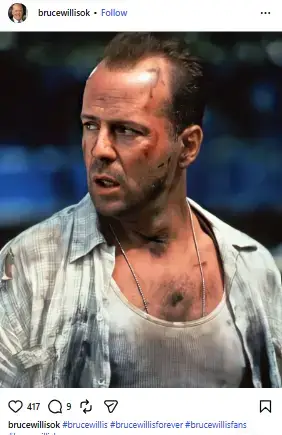
In the mid-1980s, Willis was tied to the demanding production schedule of Moonlighting, which left him with little time to take on major movie roles. When Lethal Weapon came along, the dark and violent story did not appeal to him, and his girlfriend at the time reportedly felt the script was too violent as well. Willis passed, and the role of Martin Riggs eventually went to Mel Gibson, who made it one of his signature roles.
The success of Lethal Weapon created another unexpected turn in the story. When 20th Century Fox began searching for its leading man for Die Hard, Mel Gibson was among the prominent actors considered, although the role ultimately went through a long list of potential stars before landing with Willis. At the same time, Moonlighting was forced into an 11-week production break after Cybill Shepherd became pregnant, creating an unexpected window in Willis’ schedule. That timing finally made the film possible for him.
Trending Now: Check out our most-read story of the week, the Travis Barker 'Louder Than Fear' Doc: Shanna Moakler Shade, Kourtney Kardashian & Premiere
That unexpected break gave Willis the opportunity he had previously been unable to take. Die Hard went on to transform him from a television star into a major movie star, while John McClane became the role most closely associated with his action-film career. In hindsight, passing on Martin Riggs and eventually becoming John McClane created one of Hollywood’s most remarkable casting twists.
Rumer Willis Takes APOE Genetic Test Amid Bruce Willis’ Dementia Battle
For Rumer Willis, getting a closer look at her own brain health has become a deeply personal decision. With her father, Bruce Willis, living with frontotemporal dementia (FTD), Rumer recently opened up about why she chose to learn more about her own genetic health. Her APOE test was designed to assess Alzheimer’s disease risk, rather than determine whether she inherited or would develop her father’s specific form of dementia. She described the experience as “terrifying” but said that having more information could help her make better choices about her future.
Rumer, 38, partnered with the health membership platform Function to take an APOE genetic test, which assesses genetic factors associated with Alzheimer’s disease risk. She said that while learning this kind of information can be scary, she believes “information is power” and wants to use what she learns to focus on her brain and heart health early.
Rumer disclosed an APOE ε3/ε4 result, meaning she carries one copy of the ε4 variant. APOE ε4 is associated with an increased risk of developing late-onset Alzheimer’s disease, but it is not a diagnosis and does not mean that she will develop the disease. The test also does not establish whether she inherited, or will develop, the specific form of frontotemporal dementia affecting her father.
Her decision was also influenced by more than her father’s condition. Rumer has spoken about a broader family history of serious illnesses, including breast cancer, which has encouraged her to pay closer attention to her own health. As a mother to her young daughter, Louetta, she said she wants to take small steps now rather than wait until later in life, in hopes of staying healthy and present for her family for as long as possible.
Along with discussing the test, Rumer has also shared the emotional side of watching her father’s condition progress. “I really miss my dad. I miss a different version of who he was,” she said, acknowledging how difficult some days can be. At the same time, she said she tries to focus on being present with him as he is today, rather than only holding on to memories of the person he once was.
Rumer has framed the test as one part of a broader effort to understand her health, while emphasizing that genetic information represents risk rather than certainty.
More recently, Rumer has reflected on the ways her father’s personality still lives on in his granddaughter. She has noticed Bruce’s familiar smirk and imaginative spirit in Louetta, describing the experience as both difficult and beautiful as she learns to meet her father where he is now. Those small family moments have become an important part of how she navigates the progression of his disease.
Bruce Willis Today: Latest Health Update, FTD, Family and Legacy
At 71, Bruce Willis continues to live with frontotemporal dementia (FTD), with his family remaining closely involved in his care and daily life. While the disease has changed how he communicates, his loved ones have continued to describe moments of connection that remain deeply meaningful. Recent comments from his wife, Emma Heming Willis, have also challenged the assumption that Bruce no longer recognizes the people closest to him.
Rumer has described meaningful visits between Bruce and his granddaughter, Louetta, saying that his face has lit up around her and that moments of affection and connection remain. She has also acknowledged that she cannot always know whether her father recognizes her, but says they can still feel the love exchanged during their visits.

For the Willis family, the experience has also become a way to help others facing the same difficult reality. Emma has increasingly turned that personal experience into advocacy. In 2026, she launched the Emma & Bruce Willis Fund to raise awareness of FTD, support promising research, and provide resources for caregivers. The fund was highlighted at the Association for Frontotemporal Degeneration’s 2026 Hope Rising Benefit, where Emma and Bruce were honored for their contributions to the FTD community.
Bruce retired from acting in 2022 after his family announced that he had been diagnosed with aphasia. In February 2023, the family said further evaluation had resulted in a more specific diagnosis of frontotemporal dementia. From the witty and vulnerable John McClane in Die Hard to memorable roles in movies like The Fifth Element, Pulp Fiction, and The Sixth Sense, Willis helped redefine what a leading man could be. He brought humor, vulnerability, and personality to action heroes, creating characters who felt more human than the nearly invincible stars who dominated the genre before him.
Read More: Stay updated with our latest features in the Entertainment Category
Bruce Willis’ legacy now exists on two very different fronts. His performances as John McClane, Butch Coolidge, Korben Dallas and Dr. Malcolm Crowe remain part of modern movie culture, while his family’s openness about FTD has given the disease a much larger public platform. For an actor whose career was built around larger-than-life characters, his family’s decision to speak honestly about life away from Hollywood has become an unexpected part of his lasting legacy.
Bruce’s 71st birthday in March 2026 also brought another glimpse into the family’s continued closeness. His wife, Emma Heming Willis, and daughters shared personal tributes, while Demi Moore also marked the occasion, reflecting the unusual but enduring bond within Bruce’s blended family.
For More News, Entertainment, Follow CelebWikiCorner.
.webp)
.webp)
.webp)
.webp)
.webp)
.webp)
.webp)
.webp)
.webp)

.webp&description=Entertainment)
.webp&description=Entertainment)
.webp&description=Entertainment)
.webp&description=Entertainment)
.webp&description=Entertainment)
.webp&description=Entertainment)
.webp&description=Entertainment)
.webp&description=Entertainment)
.webp&description=Entertainment)