
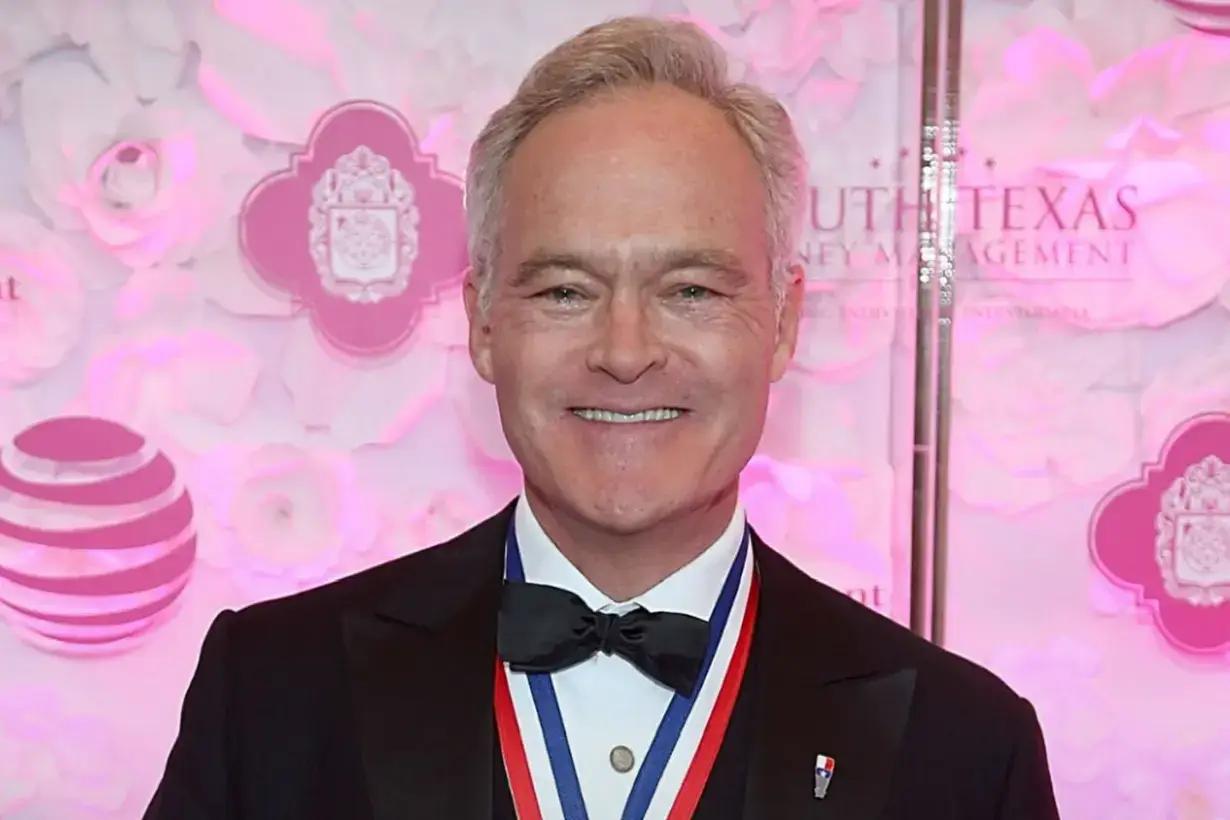
When Scott Pelley’s name suddenly became part of a growing controversy surrounding 60 Minutes, it caught the attention of viewers far beyond the usual media circles. As one of the most recognisable and respected journalists in television news, Pelley has spent decades reporting from the front lines of major world events, interviewing powerful figures, and earning a reputation for asking the questions others wouldn't.
That long-standing credibility is part of what made the recent controversy so surprising. As debate intensified around comments involving media commentator Bari Weiss and journalist Nick Bilton, speculation about Scott Pelley's future at CBS began circulating online. Weiss is best known as a journalist, author, and founder of The Free Press, an independent media company focused on politics, culture, and public debate. Headlines, social media speculation, and reports of behind-the-scenes disagreements only added to the confusion. Before long, many viewers were asking the same question: Had Scott Pelley really been forced out of 60 Minutes, or was there much more to the story than the rumours suggested? As of publication, there is no publicly verified confirmation that Scott Pelley was fired from 60 Minutes, although ongoing speculation has fueled widespread discussion.
Scott Pelley Fiery Confrontation And 60 Minutes Bagel Showdown Details
Reports and online discussions have circulated about a tense internal meeting involving Scott Pelley and CBS leadership. However, many of the details attributed to the incident have not been independently verified by major news organisations.
The meeting was supposed to be straightforward. Newly appointed executive producer Nick Bilton had gathered staff members to introduce himself and address concerns following a turbulent period at CBS News. Bilton is a journalist, author, and filmmaker known for his work covering technology and digital culture. Employees were already unsettled after the recent wave of firings that had shaken the newsroom, making the atmosphere tense before anyone even spoke.
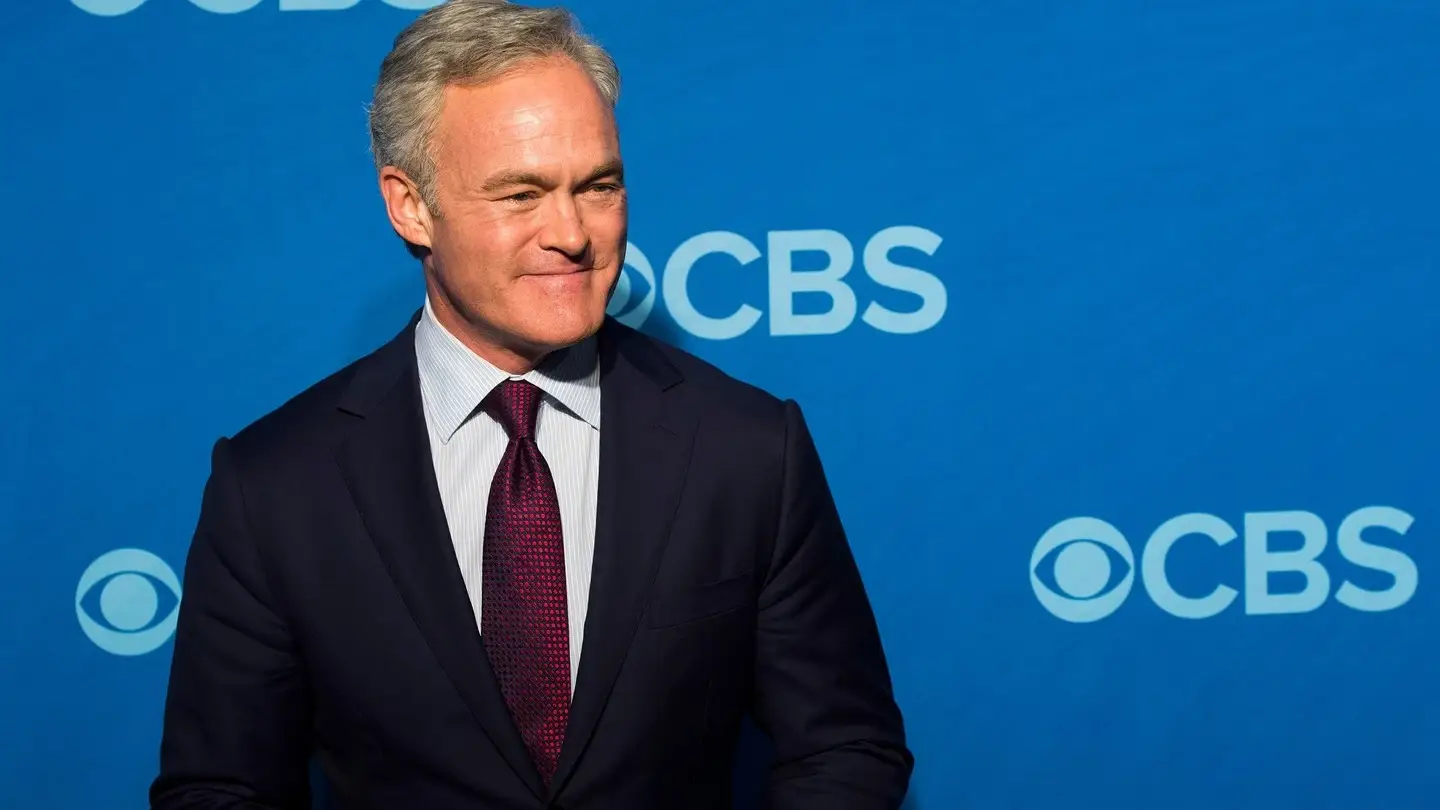
Bilton began by discussing the challenges facing television news and the need for 60 Minutes to evolve in a rapidly changing media landscape. But the conversation took a sharp turn when he attempted to reassure employees that network leadership respected the program and its legacy.
That reassurance did not sit well with veteran correspondent Scott Pelley.
Before Bilton could continue, Pelley interrupted and openly challenged the idea that leadership was protecting the show. Speaking directly to the staff, he accused those in charge of undermining the very institution they claimed to support. The room reportedly fell silent as the respected journalist voiced frustrations that many employees had been quietly discussing behind closed doors.
The confrontation quickly intensified.
When CBS News executive Charles Forelle suggested that Pelley's comments were crossing a line, the veteran correspondent pushed back immediately. He argued that the real disrespect was not his criticism but the recent decisions that had left the newsroom reeling. His remarks struck a chord with many in attendance, turning the meeting into a tense standoff between management and one of the network's most recognisable faces.
As the exchange grew more heated, Bilton suggested that Pelley discuss his concerns privately rather than in front of the entire staff. Pelley refused. Instead, he made it clear that he wanted the conversation to remain public, insisting that issues affecting the newsroom should be discussed openly among colleagues.
The atmosphere became increasingly uncomfortable as neither side appeared willing to back down.
Roughly fifteen minutes into the meeting, Bilton decided to bring the gathering to an end. Attempting to regain control of the situation, he thanked employees for attending and indicated that future discussions could take place individually. Then, gesturing toward the breakfast spread that had been arranged for staff members, he delivered a line that would instantly become famous within media circles.
If you love deep dives into massive streaming sensations, check out our breakdown of the Where Is Magen Fieramusca Now? The True Story Behind Netflix's 'Stolen Baby' Movie
"Enjoy the bagels."
With those words, Bilton walked out of the room.
The reaction was immediate. Once management had left, staff members reportedly broke into applause for Pelley. The veteran correspondent then addressed his colleagues, speaking passionately about his commitment to 60 Minutes and his concerns about the network's direction.
What began as a routine introductory meeting had transformed into one of the most talked-about newsroom confrontations in recent memory. The clash exposed deep divisions over leadership, trust, and the future of one of television journalism's most respected programs. And while the meeting lasted only minutes, the fallout from the now-infamous "Bagel Showdown" would continue long after the last bagel was gone.
Scott Pelley Leadership Criticism And Broadcast Experience Debate
At the centre of Scott Pelley's explosive clash with CBS News leadership was a question that has divided journalists across the industry: who should be trusted to lead one of television's most respected news programs?
During the tense June 1 staff meeting, Pelley reportedly challenged the credentials of CBS News Editor-in-Chief Bari Weiss, arguing that she lacked the broadcast news experience traditionally associated with overseeing a program like 60 Minutes. His comments reflected growing concerns among some longtime staff members who felt the network was moving away from leaders with deep roots in television journalism.

The discussion grew more heated when executives attempted to reassure employees that Weiss respected 60 Minutes' history and legacy. Pelley strongly disagreed. He argued that recent staffing changes and leadership decisions were weakening the culture that had defined the program for decades. For many in the room, the exchange highlighted the widening divide between veteran journalists and the network's new leadership team.
Pelley's criticism was not limited to Weiss. He also questioned whether newly appointed executive producer Nick Bilton's background as a technology journalist, author, and filmmaker provided the experience needed to guide one of television's most influential news programs. His remarks echoed concerns from employees who believed that years of newsroom and production experience were becoming less important than broader corporate priorities.
As details of the confrontation emerged, the debate quickly spread beyond CBS News. Journalists, media analysts, and industry observers began discussing whether traditional broadcast experience should remain a key requirement for leadership positions at major news organizations.
Critics, however, questioned whether leaders without firsthand experience in broadcast journalism could fully appreciate the responsibilities and challenges of producing investigative news.
Trending Now: Check out our most-read story of the week, the Where Is Jaclyn Smith Now? The Truth Behind the 80-Year-Old 'Charlie’s Angels' Star's Real Beauty Secret
As it spread beyond CBS, the debate shifted from individual personalities to larger questions about how established news organisations adapt to changing audience habits without losing the editorial standards that made them influential in the first place.
For many observers, Pelley's comments resonated because they reflected a concern shared by numerous veteran journalists. The issue was not simply about job titles or management changes. It was about whether the people making major decisions understood the standards, values, and editorial principles that helped make 60 Minutes one of the most respected programs in television history.
As the fallout continues, the confrontation remains a powerful example of the growing tension between traditional journalism and a rapidly changing media industry. The debate over experience, leadership, and the future direction of CBS News is unlikely to fade anytime soon.
Black Thursday Newsroom Oustings And Veteran Journalist Firings Backlash
“Black Thursday” has become the name insiders use to describe one of the most dramatic shake-ups in CBS News history. On May 28, 2026, Skydance Media leadership, alongside Editor-in-Chief Bari Weiss, carried out a sudden and sweeping round of firings that reshaped the future of 60 Minutes in a single day.
The move targeted some of the most experienced names in broadcast journalism. Among those removed were Executive Producer Tanya Simon, long regarded as a guiding force behind the program since 2000, and Executive Editor Draggan Mihailovich, known for his award-winning editorial leadership. Veteran correspondents Sharyn Alfonsi and Cecilia Vega were also dismissed, both of whom had played key roles in shaping the show’s modern investigative identity.
The firings were immediate and uncompromising. Affected staff reportedly lost access to their systems on the spot and were escorted out of the building by security, a detail that stunned many inside the newsroom and quickly spread through media circles.
In the aftermath, the remaining employees were told that traditional broadcast television faced a “melting ice cube” future and that major restructuring was necessary to keep 60 Minutes relevant. But instead of reassurance, the message deepened concerns among staff who saw the changes as a direct threat to the program’s identity.
Within hours, tension inside the newsroom turned into open resistance. Dozens of producers, editors, and crew members began circulating an internal protest letter describing the firings as a serious blow to the integrity and independence of one of America’s most influential news programs.
Outside CBS, backlash followed quickly. Media critics and journalism watchdogs questioned whether the overhaul was part of a broader shift in editorial direction. Some pointed to recent legal and political pressures surrounding high-profile interviews as a possible influence on the restructuring, raising further debate about independence and intent.
Former 60 Minutes Executive Producer Bill Owens also weighed in publicly, warning that removing seasoned investigative journalists could weaken the broadcast's foundation and erode public trust built over decades.
By the end of the week, the impact was already visible. With multiple veteran producers gone and correspondent roles in flux, analysts noted that the once-deep 60 Minutes roster had been significantly thinned, leaving a small group of journalists to carry forward one of television’s most iconic programs.
What began as a leadership decision quickly became a defining moment of upheaval, setting the stage for deeper conflict within CBS News in the days that followed.
Nick Bilton Termination Letter And Scott Pelley Incivility Accusations
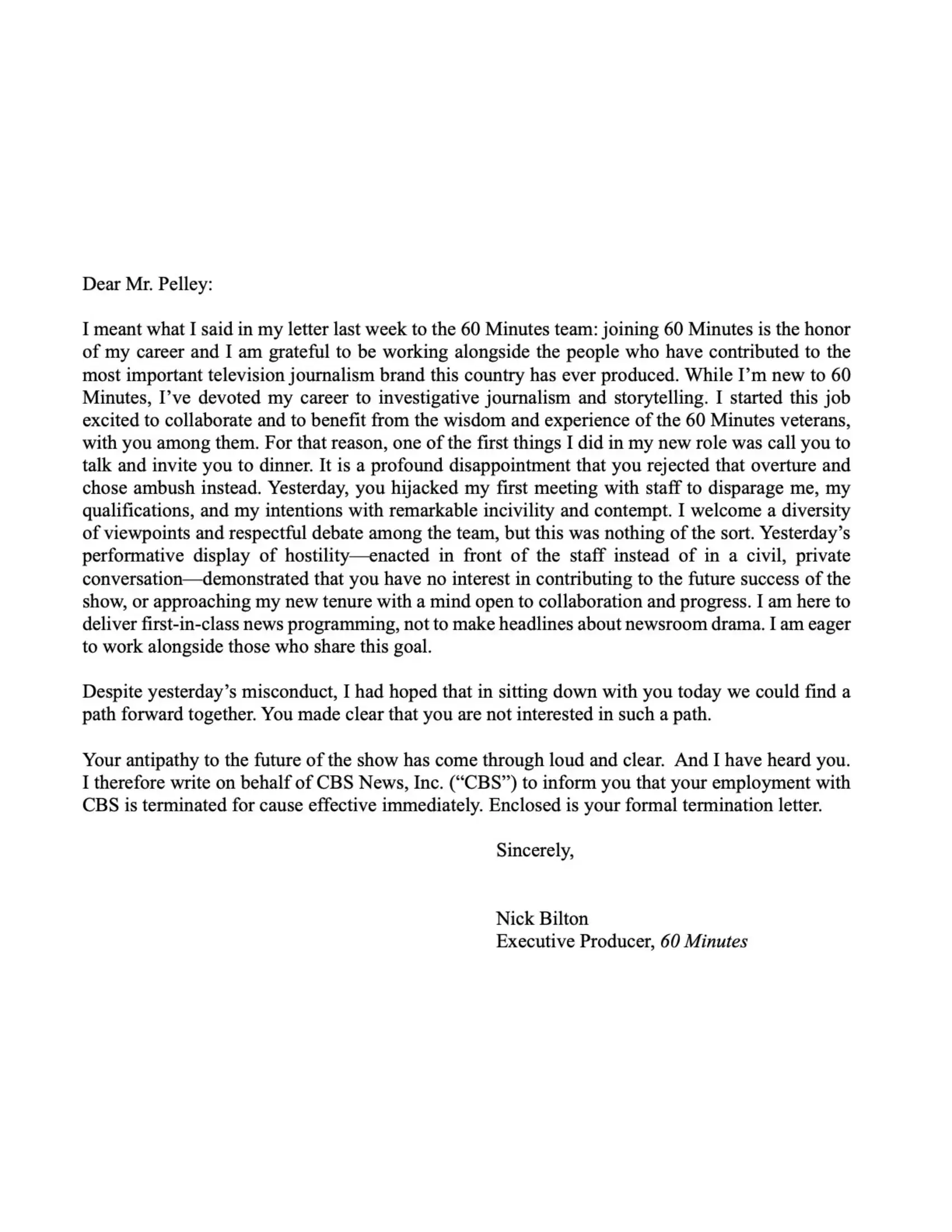
Scott Pelley’s exit from CBS News was formalised in a termination letter issued by Executive Producer Nick Bilton on June 2, 2026, marking a sharp and controversial end to his 37-year run at the network.
The letter stated that Pelley was being dismissed “for cause,” pointing to what Bilton described as “remarkable incivility and contempt” during a heated all-staff meeting. It also characterised his behaviour as a “performative display of hostility,” arguing that he deliberately escalated tensions instead of engaging in a private discussion with leadership.
According to the letter, Pelley had “hijacked” the meeting to publicly challenge executives and refused efforts to move the conversation behind closed doors. Bilton further claimed that Pelley rejected any “path forward,” signalling what he described as clear opposition to the direction of the program.
Pelley strongly pushed back against the accusations. In comments to The New York Times, he said the letter misrepresented what actually happened inside the newsroom and called it a misunderstanding of how 60 Minutes operates. He also suggested that the real issue was not his conduct, but pressure from management that he believed threatened journalistic integrity.
The dispute quickly became more than a termination. It turned into a broader clash over leadership, newsroom culture, and the future direction of one of television’s most iconic news programs.
CBS News Domino Effect And Missing 60 Minutes Correspondents Crisis
CBS News is facing what insiders are calling a “domino effect” crisis that has dramatically reshaped 60 Minutes, reducing its once-strong lineup of seven correspondents down to just three remaining veterans.
The upheaval has unfolded rapidly since late May 2026, triggered by a chain reaction of corporate decisions under the leadership of Paramount Skydance and a new editorial direction tied to Editor-in-Chief Bari Weiss. What began as internal restructuring quickly escalated into a full-scale talent drain.
Tensions first surfaced after a $16 million settlement involving a controversial 60 Minutes interview, which led to increased corporate oversight of editorial decisions. Soon after, top executives, including Bill Owens and CBS News CEO Wendy McMahon, exited the organisation, citing growing interference in newsroom independence.
The situation intensified during what staff now refer to as “Black Thursday,” when several senior producers and editorial leaders were abruptly removed. This included Executive Producer Tanya Simon and Executive Editor Draggan Mihailovich, along with other key figures who had long shaped the program’s investigative identity.
The pressure did not stop there. Correspondents who resisted editorial changes or raised concerns about blocked stories were also dismissed, deepening fears inside the newsroom about control and direction.
Read More: Stay updated with our latest features in the Entertainment Category
The final shock came with Scott Pelley's termination on June 2, 2026, after he publicly defended fired colleagues and challenged leadership decisions during a heated staff meeting. His removal marked the last major break in the program’s traditional core team.
Once a flagship lineup of seven correspondents in its 58th season, 60 Minutes now enters its next chapter with significant gaps. Anderson Cooper has already stepped away, while Sharyn Alfonsi, Cecilia Vega, and Scott Pelley have all been removed in recent actions.
This leaves only three veteran correspondents to carry the program forward: Lesley Stahl, Bill Whitaker, and Jon Wertheim.
Media observers warn that such a reduced roster could significantly strain the show’s ability to produce the in-depth investigative reporting it is known for, especially with a demanding news cycle and major political coverage ahead.
What was once a gradual transition has now become a full-scale restructuring crisis, leaving 60 Minutes at a critical turning point in its legacy.
For More News, Entertainment, Follow CelebWikiCorner.
.webp)
.webp)
.webp)
.webp)
.webp)
.webp)
.webp)
.webp)
.webp)

.webp&description=Entertainment)
.webp&description=Entertainment)
.webp&description=Entertainment)
.webp&description=Entertainment)
.webp&description=Entertainment)
.webp&description=Entertainment)
.webp&description=Entertainment)
.webp&description=Entertainment)
.webp&description=Entertainment)