
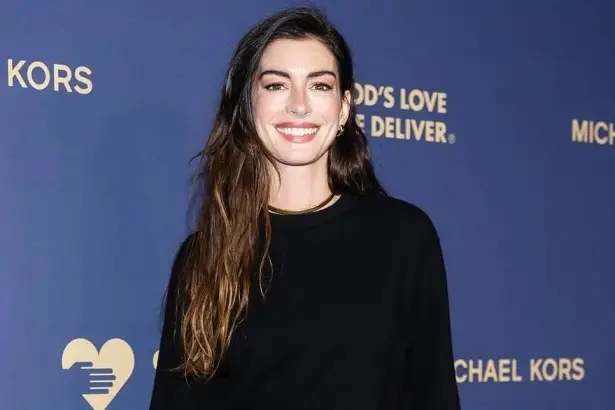
Few performers command attention quite like Anne Hathaway, a rare talent whose voice and presence seem to shift effortlessly between vulnerability and power. From early breakthroughs to award-winning performances, her versatility has allowed her to move seamlessly across genres, proving she’s far more than a one-note star. That adaptability fueled a rapid rise, placing her in some of the industry’s most high-profile, demanding roles. Whether on screen or behind a microphone, she has consistently delivered performances that feel both polished and deeply human.
But her latest project, Mother Mary, has sparked an entirely different kind of conversation. As whispers grow louder about the haunting vocals in its standout track “Burial,” fans and critics alike are starting to wonder what they’re really hearing. Are those soaring, flawless notes purely Hathaway’s, or is there something more beneath the surface? In an era where technology can blur the line between human and machine, the question lingers: Did AI quietly play a role in shaping the voice we hear?
A24 May Have Used AI On Anne Hathaway’s Vocals In Mother Mary.
There is no credible evidence that A24 used artificial intelligence to enhance or generate the vocals of Anne Hathaway in Mother Mary. Instead, Hathaway recorded her own vocals for the film’s soundtrack, following nearly two years of intensive preparation to convincingly portray a modern pop star.
The music itself was created by established artists like Jack Antonoff and Charli XCX, ensuring an authentic, human-driven production process. With original songs recorded through traditional studio methods, the film stays rooted in authentic music production.
Its creative vision centers on emotional realism, highlighting raw expression and human performance. Together, these elements emphasize genuine artistry over digital manipulation, reinforcing that Hathaway’s vocals are entirely real, not AI-generated.
Anne Hathaway’s Singing In Mother Mary Differs From Les Misérables.
Anne Hathaway’s singing in Mother Mary marks a bold evolution from her Oscar-winning performance in Les Misérables, shifting from raw, live-recorded musical theater vocals to a polished, dark electro-pop style.
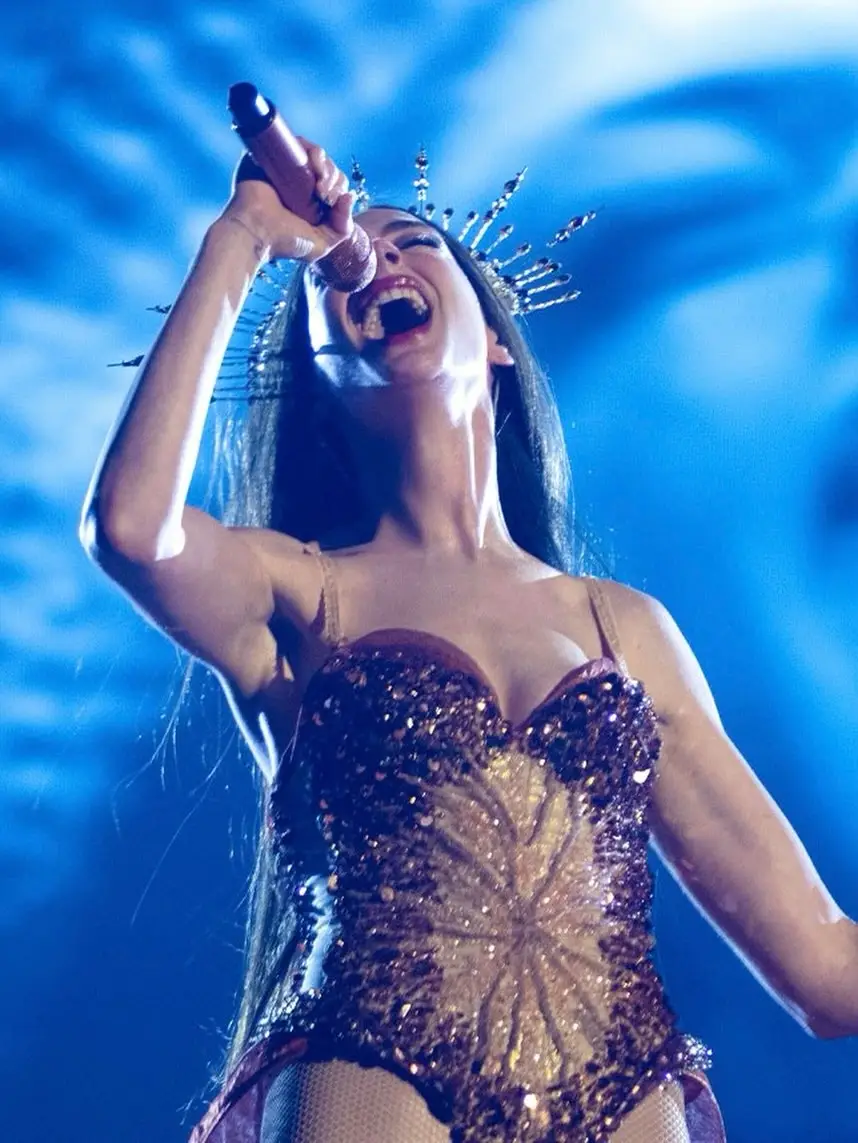
In Les Misérables, her voice was defined by fragile emotion, breathy imperfection, and live intensity, especially in “I Dreamed a Dream,” whereas Mother Mary showcases a more controlled, atmospheric sound shaped by modern pop influences.
Working alongside artists like Charli XCX and Jack Antonoff, Hathaway developed a broader vocal range and a richer lower register, delivering haunting, stylized performances that prioritize mood and presence over theatrical belting while retaining the emotional depth that defines her acting.
David Lowery Revealed Her On-Set Breakdown.
Yes, David Lowery revealed that Anne Hathaway experienced a deeply emotional breakdown while filming a climactic scene in Mother Mary, highlighting the role's intense demands.
Further Read: Christina Aguiler
According to Lowery, the moment was so powerful that Hathaway paused to apologize to her co-star, Michaela Coel, warning that the raw emotion she was about to express might feel overwhelming. Coel responded with trust and support, allowing the scene to unfold with full authenticity.
.webp "David Lowery")
The emotional intensity reportedly lasted nearly a week during filming, reinforcing comparisons to the immersive production style of Apocalypse Now and underscoring Hathaway's commitment to delivering a fearless, deeply human performance.
The “Robotic” Voice In Mother Mary May Be Intentional.
The robotic quality of Anne Hathaway's voice in Mother Mary is a deliberate artistic choice rather than a flaw, reflecting the polished, artificial world of modern pop stardom. Influenced by collaborators like Charli XCX and Jack Antonoff, the film embraces a dark, synth-driven electropop style with layered vocal effects, creating a stylized, slightly mechanical tone.
Under David Lowery's direction, this vocal approach highlights the contrast between the character's controlled public persona and her deeper emotional vulnerability. It also marks Hathaway's evolution from her raw, live-recorded musical-theater style in Les Misérables to a more atmospheric, contemporary pop performance.
Anne Hathaway May Have Shifted From Soprano To Alto.
Anne Hathaway's shift from a soprano to a lower, richer vocal range for Mother Mary was a natural discovery rather than a forced change, and it revealed a side of her voice she had not fully explored before.
You May Like: Who Is Jonathan Stuart Bailey's Partner? Is He Married?
She had spent most of her life singing in a higher register shaped by her musical theater background and upbringing, but her intensive training for the role helped her realize that her voice felt more comfortable in a deeper, more grounded range.
By improving her breathing and committing to nearly two years of consistent practice, she unlocked a fuller, warmer tone that matched the film's darker pop style. Working with artists like Jack Antonoff and Charli XCX also helped shape this new sound, making it a clear turning point in her vocal journey.
Her Deeper Voice In Mother Mary May Be Natural Or Altered.
Anne Hathaway's deeper vocal range in Mother Mary is genuine, but it is enhanced by modern pop production techniques to fit the film's dark, stylized sound.
After nearly two years of vocal training, she discovered that her voice naturally sits in a lower, richer register, a shift made possible by improved breathing and technique, rather than digital manipulation.
.webp "Anne Hathaway Poses to Mother Marry")
However, collaborators like Jack Antonoff and Charli XCX shaped the final sound using synth-driven production and layered effects, giving her vocals a polished, slightly robotic edge.
Under the direction of David Lowery, this blend of authentic vocals and stylized production helps emphasize the contrast between the character's real emotions and her carefully constructed pop star persona.
A24 May Be Using AI For A Hit Song.
There is no evidence that A24 used AI vocals for Anne Hathaway in Mother Mary, as the film's soundtrack is built on real human performance and extensive preparation.
Read More: Ella Jonas Farlinger
Hathaway spent nearly two years in vocal training to develop a darker, more contemporary pop sound, and all official tracks are credited to her as the performer. Collaborators like Jack Antonoff and Charli XCX contributed through traditional songwriting and production, not artificial generation.
Even on set, Hathaway had to ad-lib singing scenes before the final music was completed, further proving the authenticity of her performance, while the polished or slightly robotic tone heard in the songs is simply a stylistic production choice rather than the result of AI.
Mother Mary Could Impact The Voting Rights Laws.
While Mother Mary is not directly responsible for the official Vocal Rights Act of 2026, the Act will significantly shape broader conversations about AI voice ownership and artistic control.
Through Anne Hathaway's portrayal of a pop star navigating a highly manufactured identity, the film highlights real concerns about how voices can be manipulated or commercialized in the digital age. Its themes align with ongoing discussions at institutions such as the United Nations Human Rights Council, where issues of creative rights and AI are increasingly debated.
By emphasizing authentic human performance over artificial enhancement, the film serves as a cultural touchpoint that could indirectly influence how audiences, creators, and policymakers think about protecting artists in an era of rapidly evolving technology.
For More News, Entertainment, Follow CelebWikiCorner.
.webp)

-(1).webp)
.webp)
-(1).webp)
-(1).webp)
.webp)
.webp)

.webp&description=Entertainment)

-(1).webp&description=Entertainment)
.webp&description=Entertainment)
-(1).webp&description=Entertainment)
-(1).webp&description=Entertainment)

.webp&description=Entertainment)
.webp&description=Entertainment)